Olivia Friedrich · 6 September 2026
Examining the Role of DNS Propagation in Search Engine Result Page Fluctuations
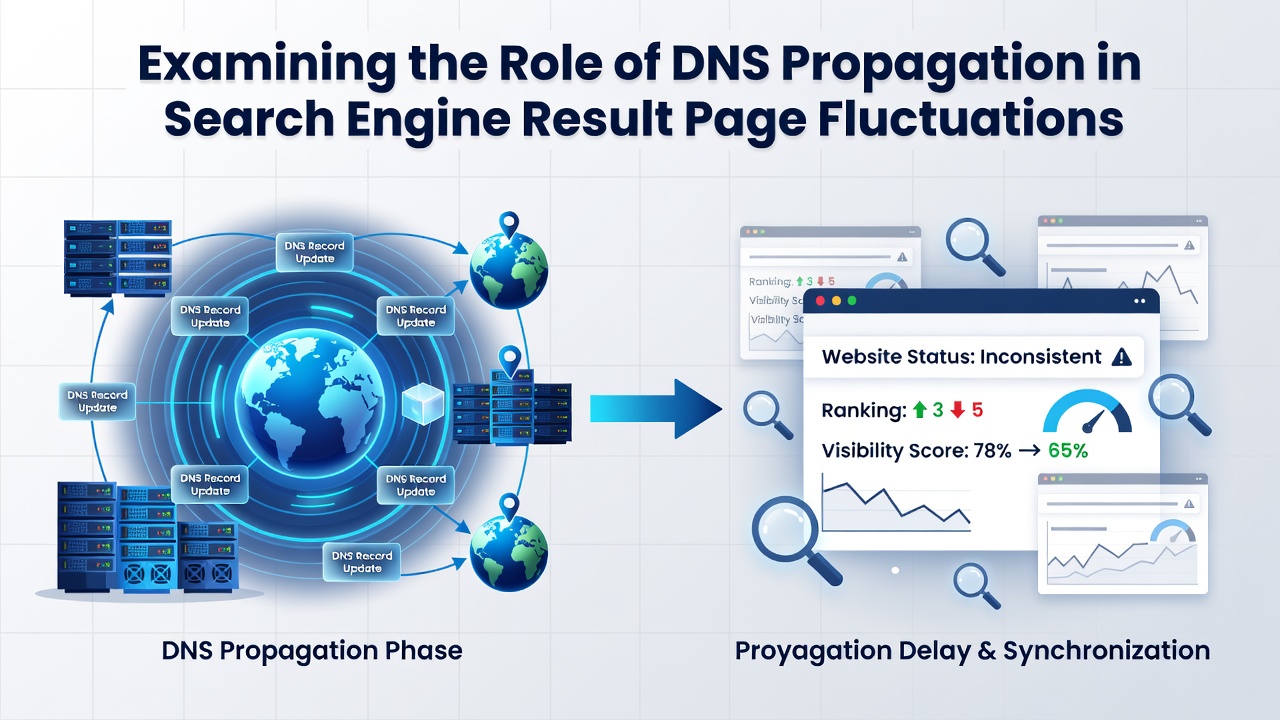
Search engine result page positions shift for many sites when domain name system records update and those changes spread across global servers, and experts track these patterns through crawl data and indexing reports that surface during such transitions. DNS propagation refers to the time required for updated records such as nameservers, A records, or MX entries to reach all recursive resolvers worldwide, and this interval creates windows where some visitors and crawlers see old information while others receive new data.
Mechanics of DNS Record Updates and Global Distribution
Domain registrars and DNS providers push changes through authoritative nameservers first, then secondary servers and caching layers receive the updated information according to time-to-live values set on each record. Shorter TTL settings allow faster refresh cycles, yet many administrators keep longer values to reduce query loads, and this choice directly extends the period during which inconsistent resolutions occur across different geographic regions. Researchers who monitor large-scale DNS datasets note that propagation windows commonly last between thirty minutes and forty-eight hours, although extreme cases stretch beyond seventy-two hours when network partitions or misconfigured caches intervene.
Search engine crawlers operate from distributed data centers that rely on the same public DNS infrastructure used by ordinary users, so a crawler instance querying a resolver that has not yet received the new record may receive an outdated IP address or fail to connect entirely. When crawlers encounter connection failures or receive responses from legacy infrastructure, the affected URLs drop from active crawl queues until subsequent attempts succeed with current records, and this sequence produces temporary gaps in indexing coverage that later manifest as ranking movements once fresh content gets processed.
Observed Patterns in Ranking Movements During Propagation Events
Analysts examining server logs alongside search console data have documented clusters of ranking volatility that align with scheduled DNS migrations or registrar transfers. In September 2026, monitoring services recorded elevated fluctuation rates for domains that completed nameserver changes during the first week of the month, wth position swings averaging three to seven spots on competitive keywords before stabilization occurred. These movements appear most pronounced for sites that rely on shared hosting environments or content delivery networks whose edge locations update at different rates than the origin infrastructure.
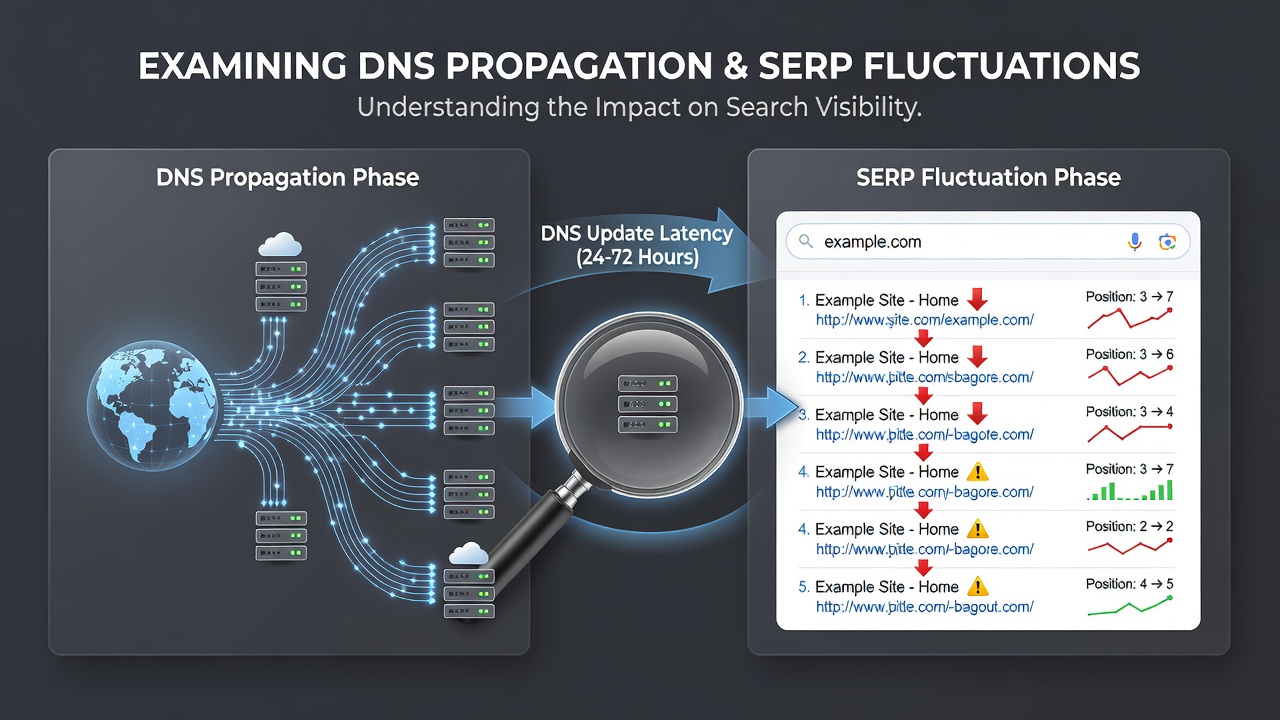
One documented instance involved a mid-sized e-commerce platform that migrated to a new anycast DNS provider, and crawl frequency dropped by approximately forty percent for twelve hours while propagation completed across major resolver networks. Once the updated records reached full distribution, crawl rates recovered and the site regained previous indexing depth, yet several category pages experienced ranking adjustments that persisted for an additional five days as search algorithms reassessed relevance signals from the newly accessible content.
Factors That Amplify or Reduce Propagation-Related Effects
Time-to-live values, resolver cache policies, and the geographic distribution of crawler endpoints all interact during these periods, and sites with international audiences face longer average propagation intervals because some national resolvers enforce stricter caching rules than others. Data collected by academic teams at institutions studying internet measurement indicates that European and Asia-Pacific resolvers often retain records longer than North American counterparts, creating staggered visibility patterns that affect how quickly search engines re-crawl updated domains. Additionally, DNSSEC validation introduces extra layers where signature mismatches during transition can cause resolvers to return SERVFAIL responses, further delaying crawler access.
Content delivery networks mitigate some impact by maintaining multiple origin mappings and health checks that reroute traffic even while primary DNS records lag, yet not every site employs such architectures. Observers note that websites running on single-region virtual private servers without redundancy experience more pronounced indexing delays when propagation windows open, and these delays correlate with measurable drops in organic referral traffic until full resolution consistency returns.
Measurement Approaches and Data Sources
Webmasters and technical teams use tools that query multiple global DNS servers simultaneously to map propagation status in real time, and they cross-reference those maps with search engine crawl statistics to identify correlations. Reports published through the Internet Society highlight how standardized measurement frameworks allow researchers to quantify propagation durations across different top-level domains and registrar ecosystems. Another set of findings from Canadian internet research initiatives shows that domains using privacy-protected registration records sometimes encounter additional verification steps that extend propagation when changes involve contact or ownership fields.
Search engines themselves publish guidelines on crawl behavior that emphasize the importance of consistent DNS responses, and site operators who maintain low TTL values ahead of planned migrations report fewer and shorter periods of reduced crawl activity. These practices do not eliminate fluctuations entirely, yet they compress the window during which inconsistent resolutions can influence indexing pipelines.
Conclusion
DNS propagation creates measurable intervals of inconsistent domain resolution that intersect with search engine crawling and indexing processes, and the resulting temporary access variations contribute to observable movements in search engine result page positions. Continued monitoring of propagation timelines alongside crawl logs provides clearer attribution for ranking changes that coincide with infrastructure updates, and operators who align migration schedules with shorter TTL periods and redundant hosting configurations reduce the duration of such effects.